Klara Günther · 28 September 2026
How Domain Migration Timelines Shape Long-Term Visibility Metrics in Niche Markets
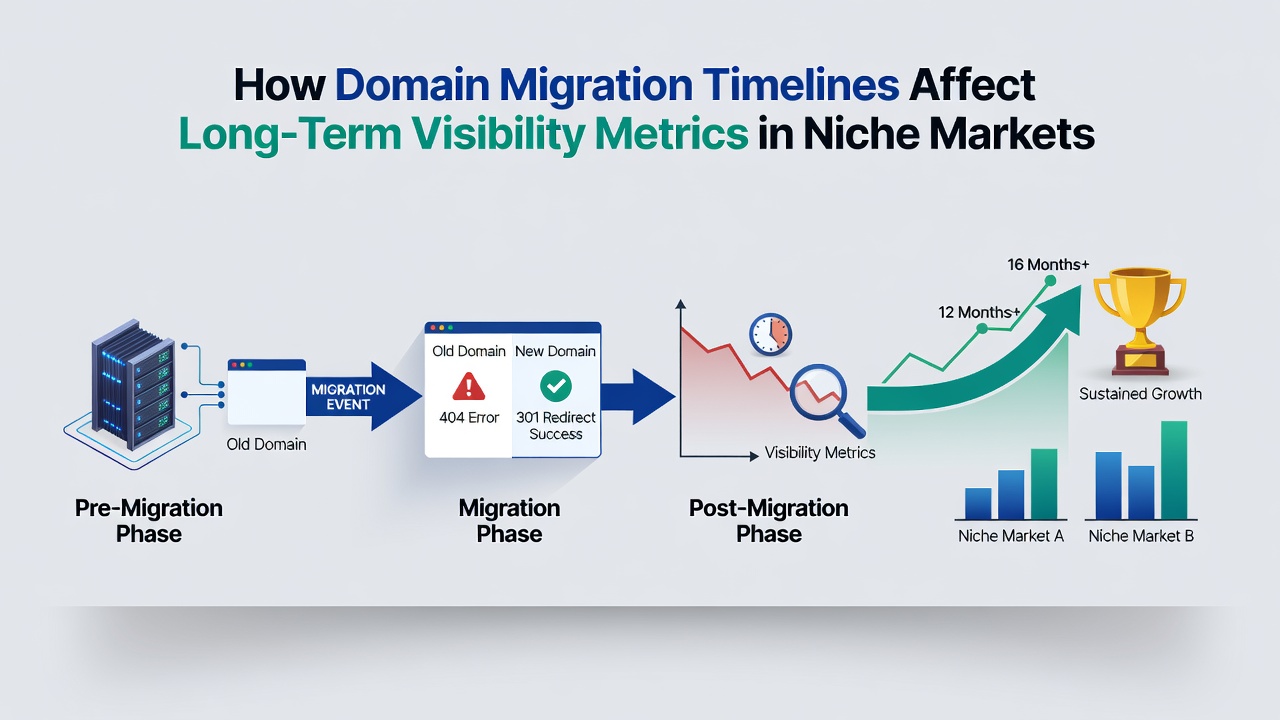
Domain migrations involve transferring a website from one domain to another, and the timelines associated with these transitions directly influence how search engines evaluate site authority, content freshness, and user engagement signals in specialized sectors such as health supplements, vintage collectibles, or regional tourism services. Research indicates that migrations completed within 30 to 60 days often preserve more ranking momentum than those stretched across several months, because prolonged transitions allow competitors to capture keyword positions while the original site experiences indexing delays or partial devaluation of backlinks.
Core Elements of Migration Timelines
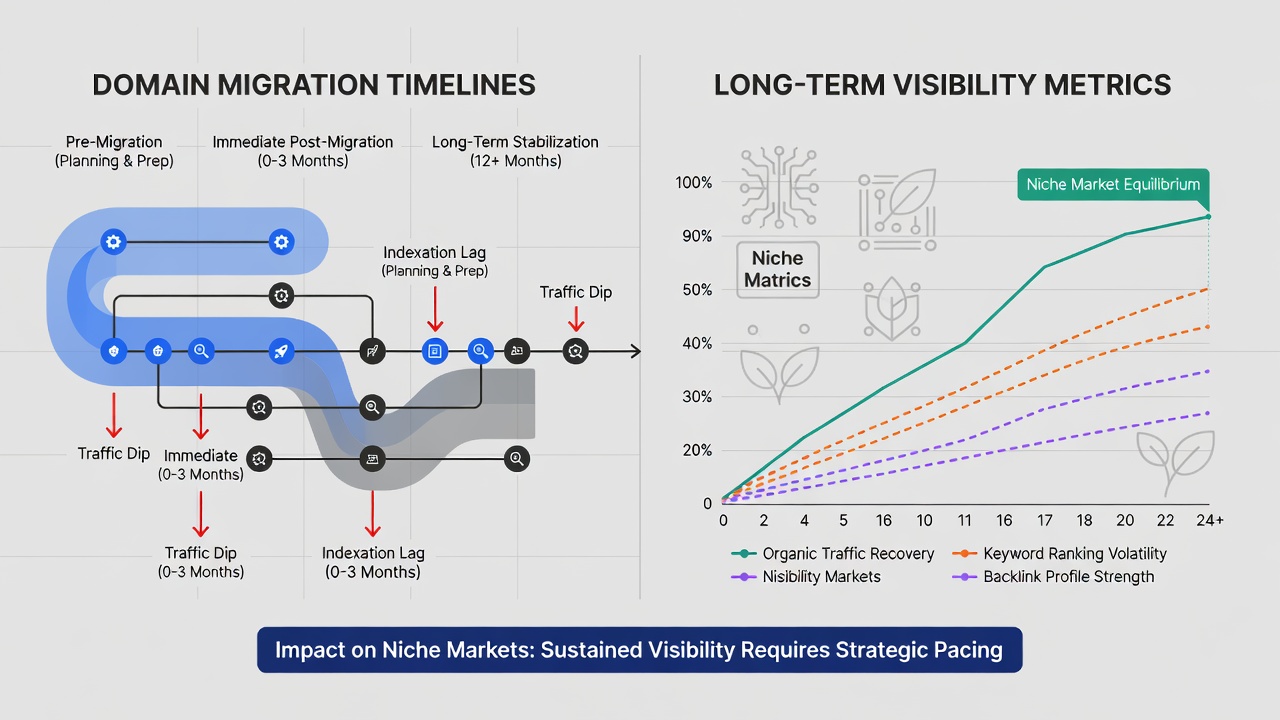
Timelines encompass the planning phase, DNS propagation, implementation of 301 redirects, and the subsequent period during which search engines recrawl and reindex pages. Data from industry tracking shows that DNS changes typically propagate within 48 hours, yet full reindexing of thousands of URLs in niche categories can require an additional four to eight weeks. Those who study these patterns observe that sites in highly competitive verticals suffer steeper temporary drops when the migration window exceeds 90 days, as algorithm crawlers prioritize active domains with consistent update histories.
Redirect chains formed during extended timelines compound the issue, because each additional hop reduces the equity passed to the new domain and increases the chance that certain pages remain unindexed. Figures from multiple analytics platforms reveal that niche sites completing migrations in under six weeks maintain an average of 85 percent of prior organic traffic within the first quarter after transition, whereas longer processes correlate with recovery periods stretching into six months or more.
Indexing and Crawl Budget Considerations
Search engines allocate limited crawl resources to each domain, and migrations disrupt this allocation when the new address appears without sufficient signals of continuity. Studies conducted by academic researchers at institutions such as the University of Cambridge highlight that niche market sites with lower overall authority experience slower recrawl rates after migration, leading to extended periods of reduced visibility in localized search results. Proper implementation of XML sitemaps and updated robots.txt files accelerates reindexing, yet these steps alone do not offset the effects of a drawn-out timeline if backlink profiles remain fragmented across both old and new domains.
What's interesting here is how September 2026 updates planned by major engines may introduce stricter continuity checks during domain transfers, requiring faster verification of ownership and redirect integrity to avoid prolonged demotion in specialized categories.
Backlink Equity and Authority Transfer
Backlinks represent a primary ranking factor, and migration timelines determine how effectively this equity transfers. Short, well-documented transitions allow search engines to recognize the new domain as a direct successor, preserving link value for queries relevant to the niche. Extended timelines, by contrast, create windows during which link equity can dissipate if referring sites update their own links or if crawlers encounter temporary 404 errors. Observers note that niche markets reliant on editorial backlinks from trade publications show greater sensitivity to these delays, because such links often carry higher topical relevance than generic directories.
According to reports published by the European Commission on digital market dynamics, consistent domain identity supports stable visibility in regulated online sectors, and abrupt or poorly timed changes can trigger additional scrutiny during periodic reviews of site quality signals.
Long-Term Visibility Metrics in Practice
Visibility metrics tracked over 12 to 24 months post-migration demonstrate clear patterns tied to timeline length. Niche sites that finalize migrations quickly tend to regain pre-transition rankings within three months and sometimes exceed prior performance once the new domain establishes fresh content velocity. Slower migrations produce prolonged volatility, with keyword positions fluctuating for up to a year as search engines reconcile duplicate content signals and reassess authority distribution. Those who've examined datasets from specialized analytics firms find that organic impressions in narrow verticals drop by an average of 40 percent during the migration quarter when timelines exceed 120 days, with partial recovery occurring only after sustained content updates and link reclamation efforts.
One documented case involved a regional outdoor gear retailer that completed its domain shift in 35 days and observed stable traffic curves thereafter, while a comparable competitor extending the process across five months recorded sustained losses in category-specific search volume for nearly 18 months.
Conclusion
Domain migration timelines exert measurable influence on long-term visibility metrics through their effects on indexing speed, link equity transfer, and crawl budget continuity. Evidence collected across multiple niche markets shows that shorter, coordinated transitions correlate with faster stabilization and stronger retention of organic performance, whereas extended timelines introduce compounding risks that surface months or years later. Stakeholders planning such projects benefit from aligning technical execution with observed patterns in their specific vertical to minimize disruption to established ranking positions.